Feeds:
Posts
Comments

Posts Tagged ‘Academics’

No one really asked for more rhetorical devices, but I’m on a roll. Here are four more of my favorites:

To use metallage (“Meh-TALL-uh-gee”) is to use a word or phrase as an object in a sentence. I’m going to go all “Pulp Fiction” on you and mention that scene with the Gimp. Marcellus Wallace (Ving Rhames) says, “You hear me talkin’, hillbilly boy? I ain’t through with you by a damn sight. I’ma get medieval on your ass.”

In that same vein, periphrasis (“Per-IF-ruh-sis”) uses a description as a name. Think Harry Potter and “He Who Shall Not Be Named.” And I’d better not hear Eddie refer to me as “The Old Ball and Chain.” Or “Fat Ass,” for that matter.

Two more devices — metonymy and synecdoche — seem to be difficult for many people to understand, and there are plenty who say they are the same. They are not.

Metonymy (“Meh-TAH-no-mee”) refers to describing something indirectly by using similar items. For example, you can say “the deep” when you are talking about the ocean.

Synecdoche (“Sin-ECK-doh-key”) swaps a thing for a collection of things, or a part for a whole. For example, the bank foreclosed on our neighbor’s house. The representatives of the bank did it, but it is easier to say “the bank.”

The difference between metonymy and synecdoche is this: When A is used to refer to B, it is a synecdoche if A is a component of B, and a metonym if A is commonly associated with B but not actually part of its whole. Representatives are part of a bank, therefore it is synecdoche. But the ocean is deep (deep water is like an ocean), so it is metonymy.

Got it? Good, ’cause I don’t wanna go all medieval on you.

Read Full Post »

When last I blogged, I mentioned “litotes,” a rhetorical device that is similar to a double negative. This device, pronounced “LIE-tuh-teez,” allows someone to make a point by denying the opposite. For example, if I said, all regal-like, “We are not amused,” you would understand that all is not well, and that you should perhaps vacate the scene.

There are loads of other devices. As soon as I point them out, you’ll start seeing them everywhere.

Take, for example, chiasmus (“Kie-AZ-mus”), a sentence that presents a mirror image of a concept. I often say that I work to live, not live to work, even though I do love my job.

Perhaps the most well-known chiasmus came from John F. Kennedy in his 1961 inaugural address: “Ask not what your country can do for you, ask what you can do for your country.”

Two other devices are similar: antithesis and anadiplosis. Antithesis establishes a clear, contrasting relationship between ideas. For example, original moonwalker Neil Armstrong said of the 1969 landing: “One small step for [a] man, one giant leap for mankind.”

Some examples of antithesis are chiastic, but not all. And if it is chiastic, then just call it a chiasmus. Antithesis = general contrast; chiasmus = specific mirroring.

Anadiplosis (“Anna-di-PLOH-sis”) goes one step further by repeating the last/first structure, but it is not a mirror. In “Star Wars Episode I: The Phantom Menace” — a dreadful movie — Yoda said, “Fear is the path to the dark side. Fear leads to anger. Anger leads to hate. Hate leads to suffering.”

Do you want to know more about rhetorical devices? Of course you do. And asking and answering a question is called hypophora (“High-PAH-for-uh”).

Read Full Post »

In 2005, when SCAD was considering offering a writing major, I thought to myself, “Self, it would be great to teach in that department.” Though I had oodles of work experience, I knew that SCAD’s accrediting body prefers terminal degrees in the field of instruction. So I had two choices: Get another M.F.A. (the one I have is in performing arts) or get a Ph.D. I chose the latter.

I had three criteria in mind as I researched programs: areas of study offered (journalism or communications), proximity and reputation. The one that fulfilled all these requirements was University of South Carolina.

Eddie badgered me to apply. “But that would require taking the GRE!” I whined. “And I’m pregnant!”

“So?” he said, with very little compassion, I might add.

Lest you think he is heartless, his philosophy was that I might as well get on it while the kids were very young. That way I would be done when they got old enough to start extracurricular activities that I wouldn’t want to miss.

I knew he was right. I forced myself to take the GRE and apply to the doctoral program in the USC School of Journalism and Mass Communications. I was accepted, and began coursework Fall 2006. The total courses involved for most folks: 16 (48 semester hours). For me: 18 (because my master’s is not in the specific area).

I finished the coursework in April 2009. I spent the summer procrastinating on my dissertation proposal, and dreading the comprehensive exams (four days, three hours a day of answering questions in four areas: theory, methods, ethics and rhetoric, which is my outside area). I passed the foreign language proficiency test in October (see related post). The comps dread continued.

The time came, though, for me to put up or shut up. I studied my haunches off in preparation for the comps, which I stupidly scheduled for the week after Thanksgiving. The 19 people in my house for the holiday might not have fully understood why I was so stressed out.

Along with the written comps, there is an oral defense. That happened today. After my committee slowly roasted me over an open fire for two hours, they decreed that I had passed. To be honest, the first 20 minutes were horrendous, but then the rest was fine. The discussion will help me hone my dissertation proposal, for sure.

And that is the next step. I defend said proposal in front of my committee Feb. 19. Once I pass (the power of positive thinking), I will work exclusively on my own research for my dissertation. Then I will have to defend my dissertation in front of the same committee. Thumbs up, and my hooding awaits. Thumbs down, and … well, that’s really not an option for me.

So if I look a little frazzled in February (and over the summer), you’ll know why.

Read Full Post »

Tonight I became “that person.” But I did what I had to do.

I couldn’t just sit there and let it continue to happen.

I answered the call. The call of the abused apostrophe.

Though I love, LOVE my children’s school, I am sometimes surprised by the notes that come home. Notes about “Dress-down Fridays” bothered me greatly. They bothered me because they advertised “Dress Down Friday’s.”

I could hear the abused apostrophe screaming.

I let it go, for a time.

But tonight in the PTO meeting, I heeded the call. The chair asked for corrections to the minutes. I saw my opportunity and took it. I begged him to allow Friday to be plural, not possessive. “Let the minutes reflect the change,” said the chair. And the apostrophe and I wept.

Afterward, a couple of other parents thanked me. And there was much rejoicing.

Read Full Post »

A contest!

In the words of that prophet Whitney Houston, “I believe that children are our future. Teach them well and let them lead the way.” Yet how are they supposed to learn correct English when adults don’t even know?

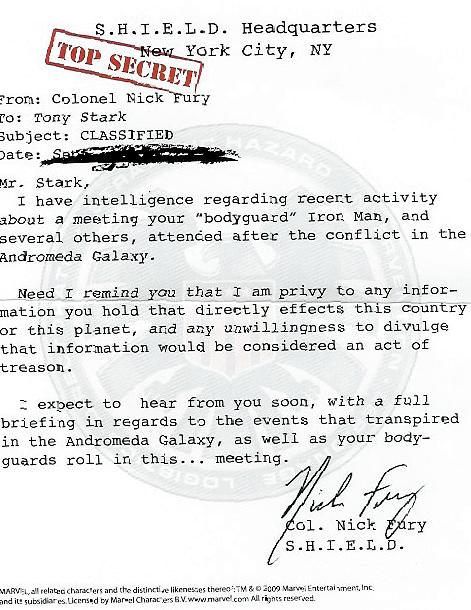
Case in point: The “top secret” file that came with Dominic’s Iron Man action figure.

Top secret file

There are two glaring errors of the homonym variety. The first readers of this blog who identify the two errors win lovely virtual prizes.

Read Full Post »

Dominic asked me last night what I asked for from Santa Claus for Christmas. I said I had everything I needed. That’s true. But like most folks, I have an Amazon wish list in case Santa wants to reward me for being a good girl this year. (Though I’m sure I’ve spent time on the naughty list too.)

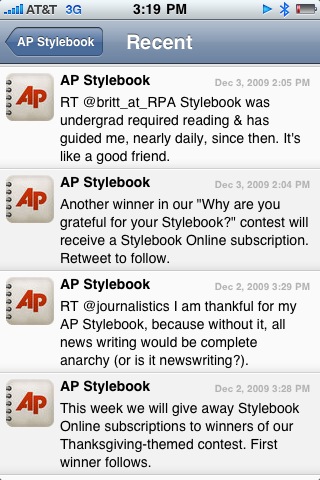
There are a couple of things I can’t add to Amazon, though, that are in keeping with my role as the grammar guru. One is a Grammar Nerd Corrective Label Pack. (I actually thought about making my own.) In that same vein, another site sells copyeditor marks, but the site appears to be down right now (in the biggest purchasing season of all, no less). And there are a bunch of other funny grammar-themed items out there. There’s also the AP Stylebook iPhone app. For regular readers of this blog who wondered if I won the Thanksgiving contest with my haiku, I did not. I was a little pissed, because I did not think the winning entries were better than mine. Yes, I know I’m biased. Judge for yourself. Here are the winners:

What I really want is time. Or maybe a clone. The clone could work on the research for my dissertation, and I’ll do the fun stuff like teaching, preparing for class, and hanging out with Eddie and the boys. I implemented a No Work Week this week, and I plan to make gingerbread people with the boys today. Wish me luck!

Read Full Post »

That which who

By request (A request! How exciting!), here is a tutorial about “that,” “which” and “who.”

First, let’s tackle “that” vs. “who.” It is easy: Use “who” when you are referring to people, and “that” when you are referring to things. If you feel strongly about your pets, they can be “who” too.

Examples:

The man who gave me “The International” now lives in Richmond Hill.

Trish is the chicken who lives with us.

The cops shot the chimp that ripped off that lady’s face. (You could use “who” here, but I prefer not to give that level of respect to that particular chimp.)

The book that sits on my nightstand is some trashy romance novel.

Now let’s talk about “that” vs. “which,” which seems to be more difficult. THAT was the proper use of “which.” Use it only when you can use a comma before it. Otherwise, use “that.” In other words, “that” is a crucial part of the sentence and describes a particular kind of thing, and “which” begins a clause that could be thrown out if necessary.

Examples:

Heidi and John held a New Year’s Eve party that resulted in a five-alarm fire.

Heidi and John’s New Year’s Eve party, which resulted in a five-alarm fire, was the talk of the neighborhood.

See the difference? Many academics don’t. Now you are smarter than a 20th grader.

Read Full Post »

It’s been a while since I’ve tackled a grammar issue, so here is a big one: when to use “I” and “me.”

I had to stop reading one friend’s blog because she misused “I” so many times.

Here’s the deal: “I” is a subject pronoun and “me” is an object pronoun. So, “You and I should go Christmas shopping” because “you and I” are subjects doing something. And, “Santa hit on you and me” because Santa is doing something to us.

It is not OK, ever, to say “Santa gave his number to you and I.”

Need a hint? Take out the other pronoun and see if it works. “Santa gave his number to I” is not correct.

And it is always “between you and me,” no matter what you hear in songs such as Jessica Simpson’s “Between you and I” — not that you are really listening to that, of course.

Read Full Post »

I’ve been so slack. Unwatched on our DVR right now: the second seasons of “Tough Love” and “Tool Academy.” How could I have been so lax? That darn dissertation proposal has kept me from my regular dosage of trashy reality TV.

I did catch “Hoarders” last night, though. You may remember that one of the graduate students in my Persuasive Writing wrote a paper trying to convince me to stop watching “Hoarders.” The argument: The people need help instead of a starring role in gawker TV. So I should stop providing an audience.

Fat chance, Elisa.

If a woman is going to reveal to the nation that she has been living in four-foot-high stacks of used adult diapers because her plumbing has been broken for two years, then I’m going to watch (in horror, of course). Goats ate the back wall of a house to get at the trash inside? Let me get my popcorn.

House of Hoarders

In exchange for letting us gasp at their lives, the hoarders do get help from the show. Yes, it may be limited and come at a price, but it is more than they had before. And I think the show is raising a consciousness that some “pack rats” may actually have a bigger problem.

Now, if you’ll excuse me, I have some TV to watch — while I clean out that hall closet …

Read Full Post »

Panic + resolve

My dissertation proposal was due today, the day of my self-imposed deadline. However, I sent it to my committee chair on Wednesday for feedback. I don’t want to work on it anymore until I get that feedback. I really don’t want to work on it anymore, period, but that’s not possible.

This is what my dining room table looked like the day I stopped working on the proposal:

Dining room table/work space/Hell on Earth

I switched gears yesterday from eating everything in sight to rereading everything on my theory reading list.

That list includes “Mass Communication Theory,” which is a struggle. Also on the list:

Herbert Gans, “Deciding What’s News”
Todd Gitlin, “The Whole World is Watching”
Edward Epstein, “News from Nowhere”
David Manning White, “The ‘Gatekeeper'”
Ben Bagdikian, “The Media Monopoly”
Elisabeth Noelle-Neumann, “Return to the Concept of Powerful Mass Media”

All of this is in preparation for the start of the comprehensive exams tomorrow. From Tuesday to Friday, for three hours a day, I will be holed up at the library at University of South Carolina-Beaufort (South campus) writing my little heart out. If (when?) I pass and successfully defend my proposal, I will be A.B.D. That stands for “all but dissertation,” but it might as well stand for “all but dead.”

Read Full Post »

« Newer Posts - Older Posts »