I guess this sign is supposed to tell folks that the faucet is on a sensor, but it makes no sense as written. It’s funny, though. I took this image somewhere in Shanghai last year.
My reaction to the photo is similar to what I’m doing today: trying to make sense out of the vast amount of communication research that deals with media ethics and the journalistic decision-making process.
Or it could be a reminder that my life is flushing down the dissertation toilet.
I’m supposed to be working on my dissertation proposal (oh that old thing), but I don’t want to neglect my blog and leave my faithful readers hanging. That’s assuming I have any, of course.
So here is a Trish anecdote for purposes of amusement (and stalling).
I was in the kitchen yesterday when I heard a knock at the front door. I thought it was weird because we have a functioning doorbell. This is what I saw when I walked around the corner:
"Anyone home?"
"I said, is anyone home?"
Apparently, this was not the first time she has come calling. Eddie said she banged on the door Friday too, and the boys cracked up.
I wonder what she would do if I let her inside. Besides poop, that is. And I certainly don’t want THAT in here.
In addition to using Twitter and Facebook to communicate, I use social media to procrastinate. And with all the stuff hanging over my head, I’ve been socializing like crazy.
One of the entities I follow on Twitter is the AP Stylebook, of course. The good folks who maintain the account are running a contest. They want people to tweet their reasons for using the stylebook. The “best” answers win a Stylebook Online subscription.
It was an offer I couldn’t refuse.
After considering many pithy responses, I decided on my go-to prop: the haiku. Here is my submission:
I use it daily
To torture writing students.
Cue evil laughter.
I didn’t know AP Stylebook retweeted my entry until I looked at my @ box and saw my post retweeted by a whole bunch of other people after the AP RT.That’s pretty cool. I hope I win …
I’m a little out of my element with this post, but clearly I’m moved enough to write.
University of New Mexico soccer player Elizabeth Lambert was suspended indefinitely for her unsportsmanlike conduct in a semifinal game against Brigham Young University.
Before Friday morning, I had never heard of this person. Today, I can’t think of anything else. Thanks, ESPN.
What was missing from the coverage Friday morning was the coach’s reaction and the college’s reaction. That response finally came Friday afternoon. As expected, Lambert apologized, and claimed, all Serena Williams-style, that she lost control in a heated moment. The full apology is posted on the college’s Web site, but here is one part:
This is in no way indicative of my character or the soccer player that I am.
Hmmm. This is the player whom the media guide praises for being “fearless when making a challenge.” The player whom head coach Kit Vela calls “fiery” on Lobo TV.
I think they liked her attitude and encouraged it. That’s the sports culture. Win at all costs. Here is a highlight reel of her actions in the BYU game.
UNM Vice President for Athletics Paul Krebs said, “There is no way to defend her actions.” But I’m willing to bet she’ll be back at it again when the spotlight is off and she is back on the field.
And that brings up a larger question of what has she learned. What has anyone learned? This kind of stuff happens all the time. It is our culture of rage where the angry cross some line (finally), apologize (sincerely or not), and then continue with their healthy careers. John McEnroe, Barry Bonds, Rasheed Wallace, Tony Stewart … the list goes on and on.
Inappropriate behavior, apology, more inappropriate behavior. Lather, rinse, repeat. It makes my head hurt.
I’ll share with you (at no cost) some advice I shared with students in my classes today:
Dress to impress.
It works if you have a job: Dress for the job you want, not the job you have so that you can look like a promotable candidate.
It works if you don’t have a job: You will not offend a potential employer if you are overdressed, but you can kill your chances if you are underdressed.
It works on a date. Obviously.
It just works.
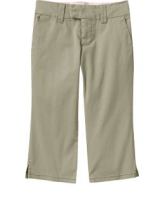
It is No. 2 that concerns me today. A candidate for a job at my fine university appeared for the interview in a knit blouse, capris and tourist sandals. Here is her outfit, displayed using reasonable facsimiles culled from various clothing sites on the Web:
Imagine this with short sleeves and a few buttons up the front
Underneath black blouse
In linen
Now here’s the kicker (literally):
The shoes. For real.
I was shocked. SHOCKED. I could have forgiven the attire, perhaps, but it was truly all downhill from there anyway.
The University of South Carolina requires proficiency in a “foreign” language for those who wish to pursue a Ph.D. It isn’t like we have to use it in our research, but it exists among the many requirements for the doctoral degree.
In April, I decided to get the language proficiency exam out of the way. I speak Spanish with Eddie and his family, so I wasn’t particularly worried. That attitude cost me dearly.
What I assumed would be a conversational Spanish exam turned out to be a translation nightmare from the bowels of Hell: Translate in one hour a 500-word passage about the history of journalism from the time of Julius Caesar. Um, I don’t usually talk about the “foro romano” with my mother-in-law. What is worse is that I only had a very wee Spanish-English dictionary. So that didn’t go well.
Later I found out it is a scam. They want you to fail so that you have to pay for and pass the class. On principle, I refused to take the class. Instead, I bought a larger dictionary and vowed vengeance.
Before (left) and after (right)
I took the exam again on Oct. 21. Though I had studied up on my Roman history in preparation, they had a new passage for me to translate. It was a forward to a contemporary collection of essays about journalism. I breezed right on through.
Today I received notice in a mass e-mail that I passed:
Recipients of this message have PASSED the Spanish Reading Exam. Congratulations. Please respond to this e-mail to acknowledge receipt of this mail and include again the name of the faculty member to whom I should send the letter for your file.
I received the following depressing e-mail yesterday:
Hi Ruben and Beth,
Unfortunately, we only received seven applications for the Mexico 2009 off-campus programs.
I had hoped that a few more might come in this week, but no luck.
I have notified the applicants that the trip has been canceled for this year—hopefully we will be able to schedule it again in the future.
Blaine
There needs to be at least 12 students. What happened to all the “I’m going!” folks? I was really looking forward to conducting this off-campus program. On the bright side, I now have two extra weeks of freedom in December.
Passive voice bothers me and sucks the life out of material. Academics, politicians and other bureaucrats LOVE passive voice. My students seem to like it too. At least that’s what their papers indicate.
Examples:
“As Americans, we tend to be frowned upon.”
“A new collection of her nonfiction has just been released.”
Just say WHO did/does/is doing WHAT, and say it first:
“French people tend to frown upon Americans visiting Paris.”
“Random House just released a new collection of Toni Morrison’s nonfiction work.”
I like this page because it offers more examples and advice, and has a quiz. Doesn’t everyone like a quiz?
 I guess this sign is supposed to tell folks that the faucet is on a sensor, but it makes no sense as written. It’s funny, though. I took this image somewhere in Shanghai last year.







 Observe and report